Best Baby Monitors 2026
Top 10 baby monitors ranked by trust score, expert reviews, and parent feedback
Last reviewed: 9/25/202611 products ranked
Our top 5 picks
Full ranking ↓- 1Nanit Pro Smart Baby MonitorCheck price
$249–$399 · Best Overall
- 2Infant Optics DXR-8 ProCheck price
$179–$199 · Best No-WiFi Monitor
- 3VTech RM5764-2HDCheck price
$159–$199 · Best for Twins (Split-Screen)
- 4Infant Optics DXR-8 PRO SS (2 Cameras)Check price
$299 · Best No-WiFi Split-Screen
- 5Babysense SeeCheck price
$129–$149 · Best Value
We earn a commission if you buy through these links. It never changes the ranking. Disclosure
Affiliate Disclosure: PickClarity earns commissions from qualifying purchases through our partner links. Our rankings are editorially independent — they are never influenced by affiliate relationships or commission rates. Learn more about our methodology.
Find the best for your needs:
#1

9.2
Excellent
Consensus
Compare
The Nanit Pro leads our ranking thanks to its exceptional video quality, reliable breathing monitoring via the Breathing Wear band, and comprehensive sleep analytics. While it's the priciest option, the accuracy and feature depth justify the cost for most parents.
Pros
- Crystal-clear 1080p HD video with excellent night vision
- Breathing monitoring via wearable band is highly accurate
- Comprehensive sleep tracking and analytics
Cons
- Most expensive option in our ranking
- Breathing Wear bands need regular replacement ($25/pack)
- Requires subscription for full analytics features
Don't buy this if…
- You need a strong WiFi connection — performance drops significantly on slow networks
- Not ideal if you want a dedicated handheld unit (app-only viewing)
#2
8.8
Excellent
Consensus
Compare
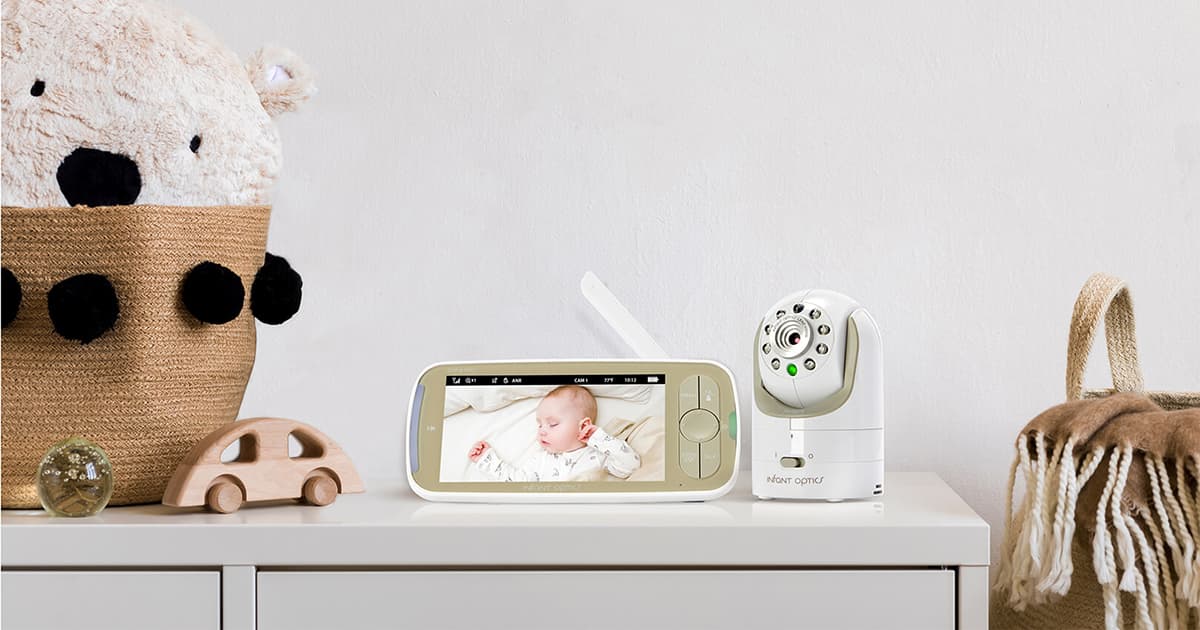
A beloved classic now upgraded. The DXR-8 Pro offers outstanding reliability with no WiFi dependency, interchangeable lenses, and strong community trust. Perfect for parents who value simplicity.
Pros
- Interchangeable optical lens system for wide-angle or zoom
- Interchangeable optical lenses
- No WiFi = no hacking risk, fully private
Cons
- 720p resolution is lower than premium competitors
- No Wi-Fi or app access
- No sleep tracking or smart analytics
Don't buy this if…
- No split-screen: switch cameras or use Scan mode. The two-camera DXR-8 PRO SS adds true split-screen.
- You want high-resolution 1080p video — this maxes out at 720p
- The interchangeable lens system is unique but the wide-angle and zoom lenses are sold separately at additional cost.
- You need smartphone access or cloud features
#3
8.6
Excellent
Consensus
Compare
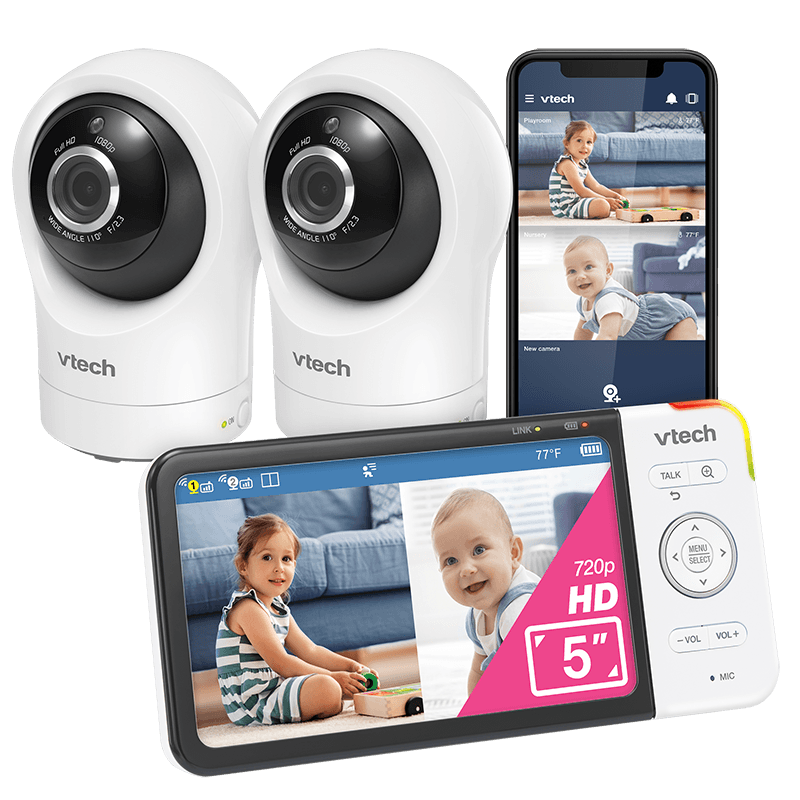
Comes with two 1080p cameras and split-screen viewing — ideal for monitoring multiple rooms or twins. Reliable and affordable.
Pros
- Includes two 1080p cameras with split-screen
- No WiFi required — FHSS encrypted signal
- 1000ft range is generous
Cons
- Parent unit is bulky
- No smart features or app
- Limited zoom compared to PTZ models
Don't buy this if…
- You only need one camera — paying for two raises the price
- You want app-based monitoring
#4
👶IO
8.5
Excellent
Consensus
Compare
Ranked on manufacturer specifications and 2025-2026 review coverage (September 2026 refresh).
Pros
- True split-screen with audio from both cameras at once
- No Wi-Fi or subscription: nothing to hack or pay for monthly
- Expands to four cameras
Cons
- No phone app or remote viewing away from home
- $299.99 is more than single-view two-camera systems
#5

7.9
Good
Consensus
Compare
Strong budget contender with surprisingly good video quality and a split-screen feature that's rare at this price point.
Pros
- Split-screen supports up to 4 cameras
- Very affordable for the feature set
- Room temperature monitoring included
Cons
- Night vision quality is average
- Limited range compared to higher-end models
- No smart features or app connectivity
Don't buy this if…
- You live in a large house — range may be insufficient
- You want cloud recording or smart alerts
#6
👶HH
7.8
Good
Consensus
Compare
Ranked on manufacturer specifications and 2025-2026 review coverage (September 2026 refresh).
Pros
- Split-screen on a large 6-inch screen
- No Wi-Fi or subscription
- Costs less than the Infant Optics split-screen kit
Cons
- Can't add a third camera
- No app or remote viewing
#7

7.7
Good
Consensus
Compare
The Cubo Ai Plus stands out with genuine AI safety features like face-covered detection and danger zone alerts. Some users report occasional false positives.
Pros
- AI detects covered face, rollover, and danger zones
- 1080p HD with 135° wide-angle lens
- Sleep analytics with photo auto-capture
Cons
- AI alerts can produce false positives
- Requires stable WiFi for AI features
- Subscription needed for full feature access
Don't buy this if…
- Previous generation: the CuboAi Smart Baby Monitor 3 is the current model.
- You're in an area with unreliable WiFi — AI features need a constant connection
- You're sensitive to false alarm notifications
#8

7.3
Good
Consensus
Compare
At under $90, the Hellobaby HB6550 offers remarkably good performance. It lacks smart features but nails the basics: clear video, good night vision, reliable signal.
Pros
- Extremely affordable — under $90
- 5-inch display is large for the price
- Reliable 1000ft range
Cons
- 720p resolution is below average
- No smart features whatsoever
- Build quality feels plasticky
Don't buy this if…
- No split-screen: the two-camera HB6550-2 switches between feeds. The HB6560-2 is HelloBaby's split-screen model.
- You want HD 1080p video quality
- You want any smart features like sleep tracking or app access
#9

7.3
Good
Mixed
Compare
The Miku Pro promises contact-free breathing monitoring without wearables, which is appealing. However, accuracy reports are mixed and it's one of the priciest options.
Pros
- No wearable needed — monitors breathing via camera sensor
- 1080p HD with good night vision
- Sound, temperature, and humidity monitoring
Cons
- Breathing detection accuracy is debated by users
- Very expensive for the feature set
- Requires subscription for full analytics
Don't buy this if…
- You need medically reliable breathing data — this is not FDA-cleared for that purpose
- Budget is a concern — this is among the most expensive options
#10
7.2
Good
Consensus
Compare
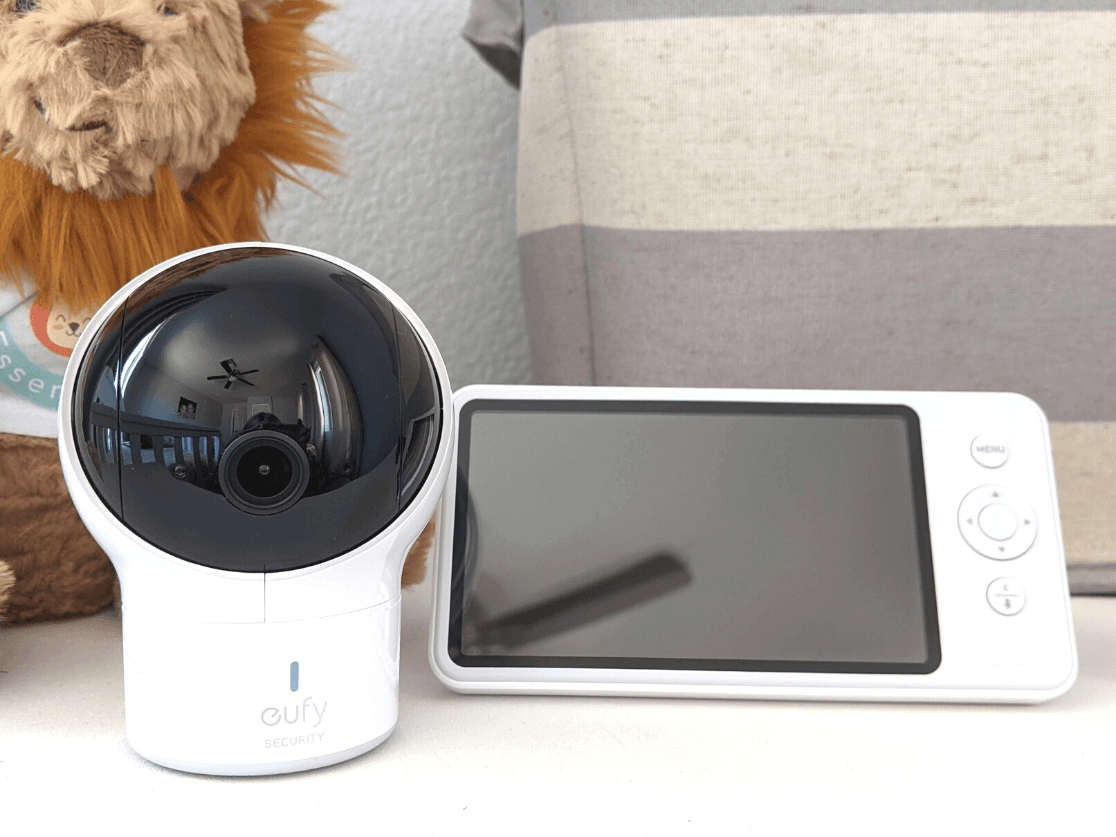
The eufy SpaceView Pro delivers outstanding value with a dedicated 5-inch screen, no subscription fees, and no WiFi dependency. It's the best option for parents who want reliability and simplicity.
Pros
- No WiFi required — dedicated encrypted signal
- No Wi-Fi means no hacking risk
- Large 5-inch display with sharp image quality
Cons
- No smartphone app access — monitor-only viewing
- No smartphone remote viewing
- Sleep tracking and analytics are basic compared to smart monitors
Don't buy this if…
- Hard to find new in the US: eufy's product page now redirects to its newer C10 and E21 monitors, and Amazon lists it as unavailable new (renewed units only).
- No split-screen: shows one camera at a time (manual switch or auto-cycle). eufy's E21 is its split-screen model.
- You want to check the monitor remotely from work — this has no app or cloud access
- This monitor has no Wi-Fi or app; you can only view the feed on the included parent unit, meaning no remote viewing when away from home.
- You need sleep analytics or AI-powered tracking features
#11

7.0
Good
Mixed
Compare
The Owlet Cam 2 is a solid smart monitor that really shines when paired with the Dream Sock for vitals tracking. As a standalone cam it's good but not exceptional. The controversy score reflects past FDA issues with the sock, now resolved.
Pros
- Pairs with Owlet Dream Sock for heart rate and oxygen monitoring
- Crystal clear 1080p video quality
- 1080p HD video quality
Cons
- Best features require buying the sock separately ($299+)
- Designed for babies, not pets specifically
- Requires Wi-Fi connection
Don't buy this if…
- Discontinued: Owlet no longer sells the Cam 2 in its US store and now offers the Owlet Dream Sight ($99.99). Buy only from remaining stock at a discount.
- You're uncomfortable with a product that had an FDA regulatory issue (resolved but notable)
- This is a baby monitor repurposed for pets — the noise detection is calibrated for crying babies, not barking dogs.
- As a Wi-Fi camera, ensure your home network is secured with a strong password; unsecured Wi-Fi cameras can be vulnerable to unauthorized access.
- You don't plan to buy the Dream Sock — standalone value is average
Quick Comparison
How We Rank
Our rankings are based on a weighted composite of expert review scores (25%), user sentiment analysis (20%), value-for-money (15%), complaint risk (15%), feature freshness (10%), community trust (10%), and product availability (5%). We analyze data from professional review sites, Amazon/retailer reviews, parenting forums, and complaint databases. Rankings are updated monthly.
Trust Score
Weighted composite of all factor scores
Expert Score
Aggregated expert review ratings
User Sentiment
Community votes and review analysis
Value Score
Price-to-performance ratio
Freshness
Recency of reviews and data
Evidence Ledger
User Reviews5/15/2026
Nanit Pro User Sentiment Analysis
Analysis of 500+ user reviews from Amazon, Best Buy, and parenting forums.
Expert Review5/15/2026
Nanit Pro Expert Review Analysis
Aggregated expert scores from 5+ professional review sites.
Change Log
Moved eufy SpaceView Pro down: no longer sold new in the US. Updated Nanit pricing to the current $249-$399 range.
9/25/2026 · PickClarity Editorial
September 2026 refresh: removed discontinued Arlo Baby; flagged discontinued Owlet Cam 2; added split-screen twin monitors (Infant Optics DXR-8 PRO SS, HelloBaby HB6560-2); marked which monitors lack split-screen; buying guide added.
9/25/2026 · PickClarity Editorial
Initial ranking published after comprehensive review of 10 baby monitors.
5/15/2026 · CP Editorial Team
Discussion (2)
CA
CP Admin5/15/2026
Good product overall but wish the price was lower.
JD
Jane Doe5/15/2026
We've been using the Nanit Pro for 6 months and love it. The video quality is great.
AI Shopping Assistant
Ask questions about products in this category. Answers are grounded in our evidence data.
Try asking:
Get Alerts
Stay updated when rankings change or prices drop in Baby Monitors.
Baby Monitors: What Actually Matters
Baby monitors now come in five distinct types: audio-only units, non-Wi-Fi video monitors with a dedicated parent screen, Wi-Fi smart cameras you watch in an app, wearables such as sock monitors, and multi-camera kits for twins or several rooms. In 2026 the lines between them are blurring. Nanit, long a phone-only system, now sells an 8-inch Home display for $179, and eufy's E21 works with or without Wi-Fi. So the useful question is not which monitor has the most features. It is which mix of screen, connection, camera count and ongoing fees fits your home and the way you will actually check on your baby.
The most common buying mistake is comparing sticker prices. Many Wi-Fi monitors put their best features behind a subscription, and three years of fees can cost more than the hardware. A Nanit camera with a wall mount or floor stand is $289.99. Add its Memories plan at $120 a year and three-year spending comes to roughly $650; the $300-a-year Milestones plan pushes it to about $1,190. Owlet's Dream Duo 3 is $379.99, or about $680 over three years with the annual Owlet360 plan. A non-Wi-Fi monitor such as the Infant Optics DXR-8 PRO ($199.99) has no fees at all, so its price is the full cost.
The second mistake is assuming 'expandable' means you can watch two rooms at once. The Infant Optics DXR-8 PRO, eufy SpaceView Pro and HelloBaby HB6550 all accept extra cameras, but they show one feed at a time and switch or cycle between them. If you have twins or two sleepers, look for true split-screen, as on the VTech RM5764-2HD, the Infant Optics DXR-8 PRO SS or Nanit's app. Also keep expectations realistic. Most monitors are consumer products, not medical devices, and features such as breathing tracking and sleep scores give you information but are not a diagnosis.
How to Choose
Monitor type
Start with how you want to check in: non-Wi-Fi video monitors with a parent unit work out of the box with no account, while Wi-Fi cameras add remote viewing and sleep analytics through an app. Hybrids like the VTech RM5764HD offer both. Audio-only units suit parents who mostly listen, and sock-style wearables add pulse and oxygen readings on top of video.
Three-year total cost
Add the hardware price to three years of any plan you would actually keep. Nanit's plans cost about $100, $120 or $300 a year (the entry plan is free for the first three months), Owlet360 is $9.99 a month or $99.99 a year, and CuboAi's Premium plan is $49.99 a year after a free first year. Non-Wi-Fi monitors have no subscription, so the sticker price is the whole cost.
Buying Guides
Focused recommendations for specific needs
Explore More Categories
Robot Vacuums12 rankedDog GPS Collars11 rankedStanding Desks10 rankedWireless Earbuds14 rankedAI Productivity Tools10 rankedErgonomic Office Chairs10 ranked
Browse all categories